Industrial AI and Advanced Process Control

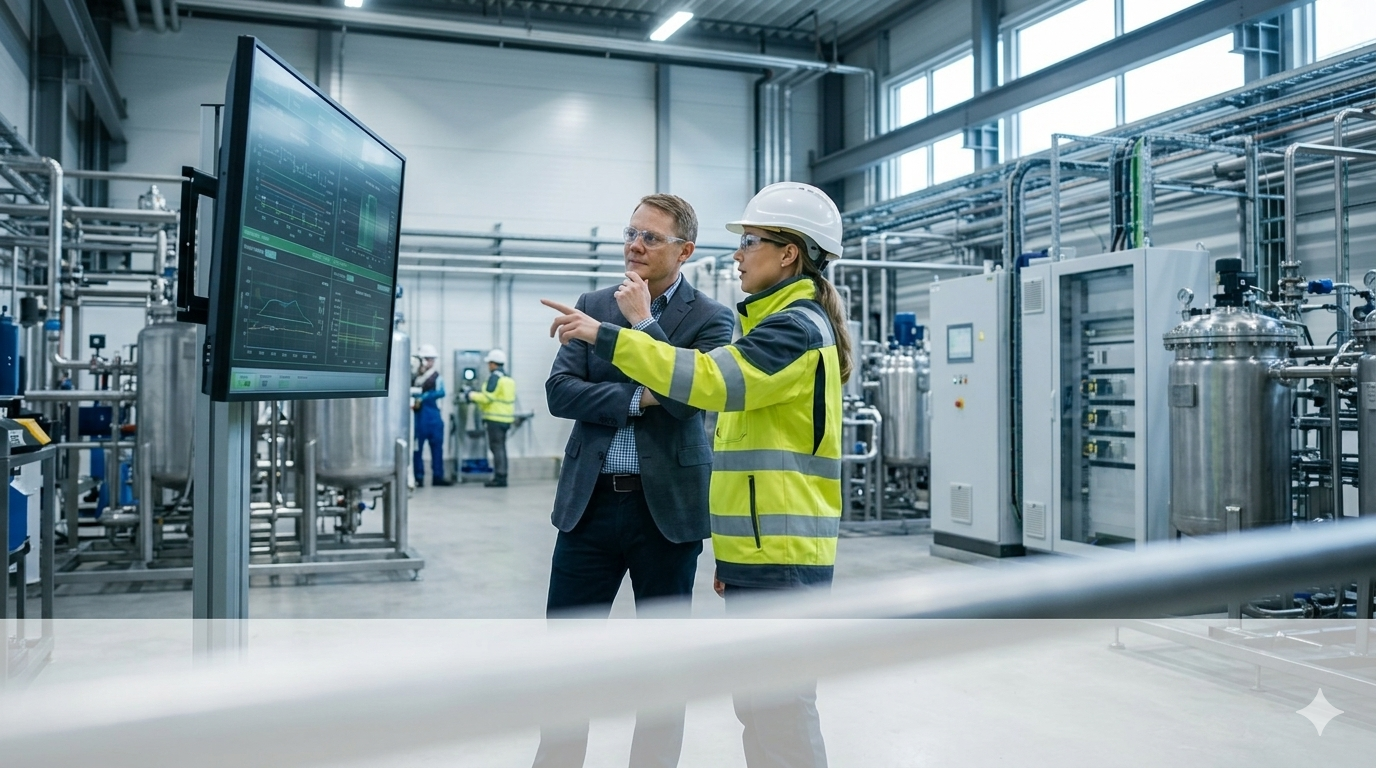
You are losing energy, material, quality, or commissioning time because your process or machine behaves differently across operating conditions — and generic digitalization does not fix the underlying dynamics.

In practice, the same root issue appears in two common situations: production teams under performance pressure, and advanced engineering systems that no longer behave robustly under real operating conditions.

Production performance

Typical symptoms in production companies:

  • Hidden efficiency losses, waste, scrap, or rework
  • High energy consumption and unstable product quality
  • Processes reacting too sensitively to raw-material variation or disturbances
  • Operators relying on experience instead of robust decision support
  • Optimization ideas that cannot be tested safely in production
  • Internal teams lacking specialist control, modelling, or optimization expertise
Advanced engineering systems

Typical symptoms in advanced technical systems:

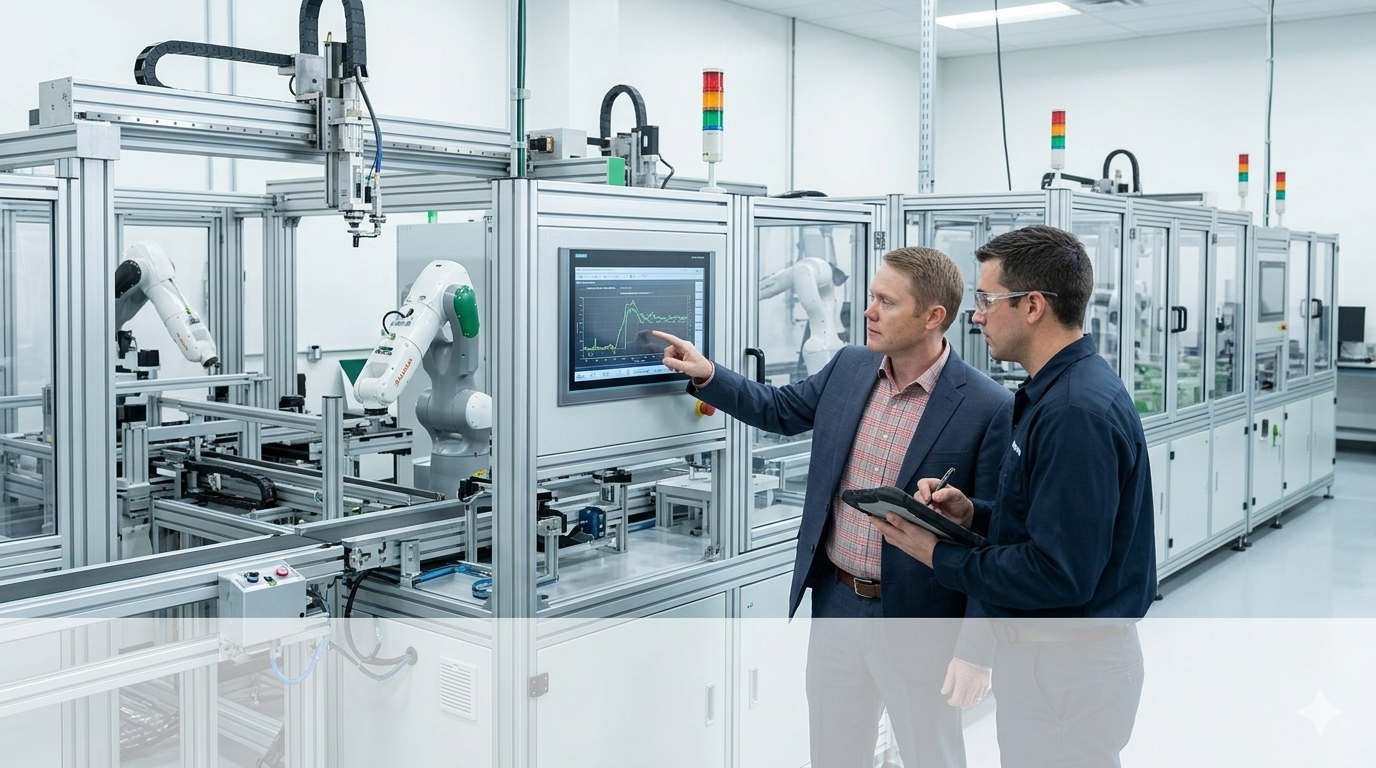
  • A new machine or system generation was built, but the inherited control concept no longer fits
  • Key states are only measured indirectly, so a soft sensor or estimator is needed
  • Optimization, simulation, or MPC looks plausible offline but is not robust in the real system
  • Commissioning is slower and riskier because nobody really trusts the current models, measurements, or loop behaviour

The missing link: dynamics, measurements, and constraints

Most of these issues are not just data problems. They come from the interaction of process physics, control loops, measurements, constraints, operator decisions, and changing operating conditions.

  • which variable should actually be changed
  • which constraint really matters
  • which measurement can be trusted
  • which model is good enough
  • how to test a better operating strategy without risking production
  • how to turn process knowledge into stable automatic or semi-automatic control

Your Benefits

  • More throughput and faster cycle times at the same quality
  • Lower energy, fuel and raw material cost; reduced waste and emissions
  • More stable processes despite disturbances, varying inputs and model uncertainty
  • Faster commissioning and shorter trial times
  • Reduced component wear, actuator fatigue and maintenance cost
  • Lower dependency on scarce specialists — advanced automation handles complex tasks around the clock without requiring expert operators on every shift

How the engagement starts

From the first call to ongoing senior advisory — four steps, one paid entry point.

Why my expertise fits

I have solved this class of problem before: nonlinear systems with incomplete measurements, hard constraints, changing operating regimes, and inherited controllers or optimizers that no longer behave predictably.

International formation & on-site availability: PhD across Spain, Switzerland (CERN), and Japan · Master across France, Germany, and Poland · C2 in 5 languages (PL, DE, EN, FR, ES) · on-site days available EU-wide.

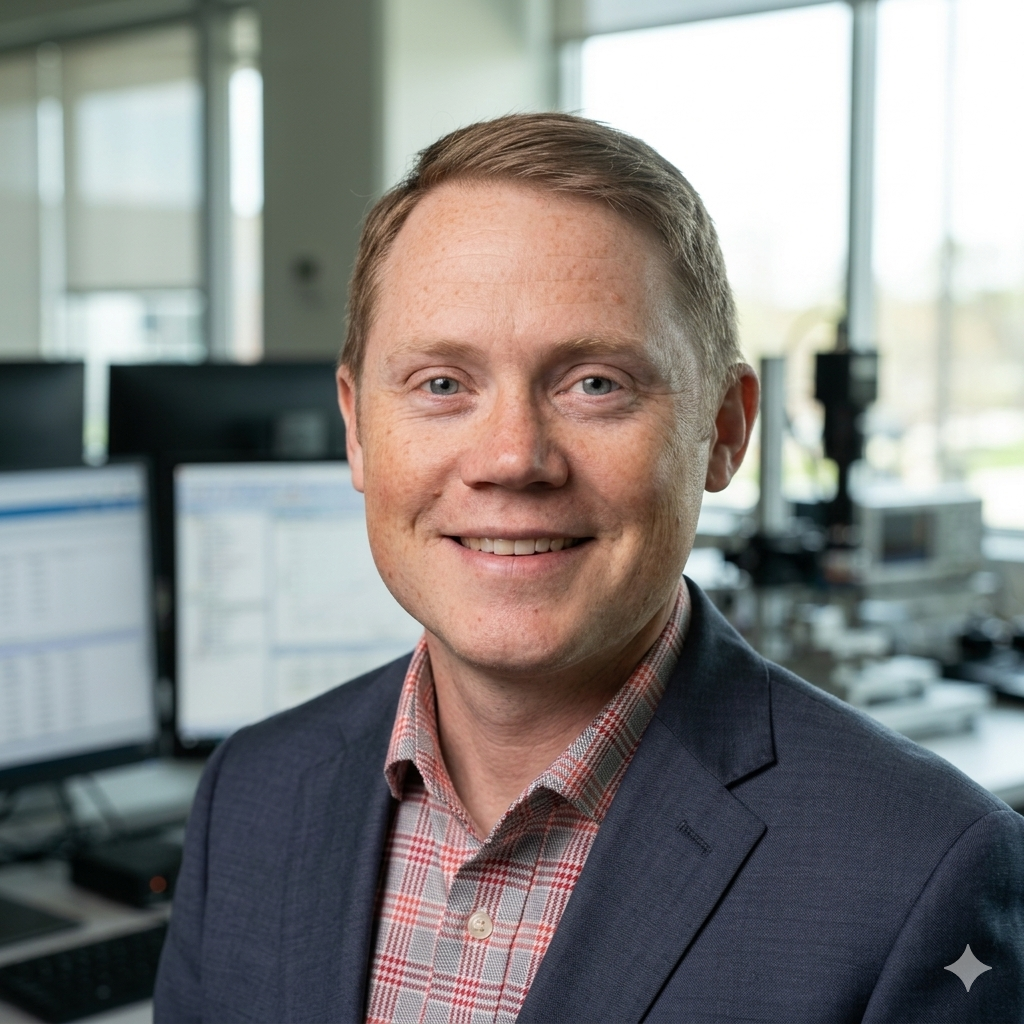
Dr. Rafał Noga, Industrial AI & Advanced Process Control
2000 Hands-on control since
LHC Real-time NMPC tested at CERN
PhD in Control Systems
5 Languages spoken
Experience at
CERN IAV GmbH Skysails Power GmbH evosoft GmbH (Siemens) Atena Engineering GmbH (Assystem Group)

Previous positions, not client endorsements.

Tools & Platforms
Python MATLAB / Simulink C / C++ CasADi / acados WinCC OA

My success stories

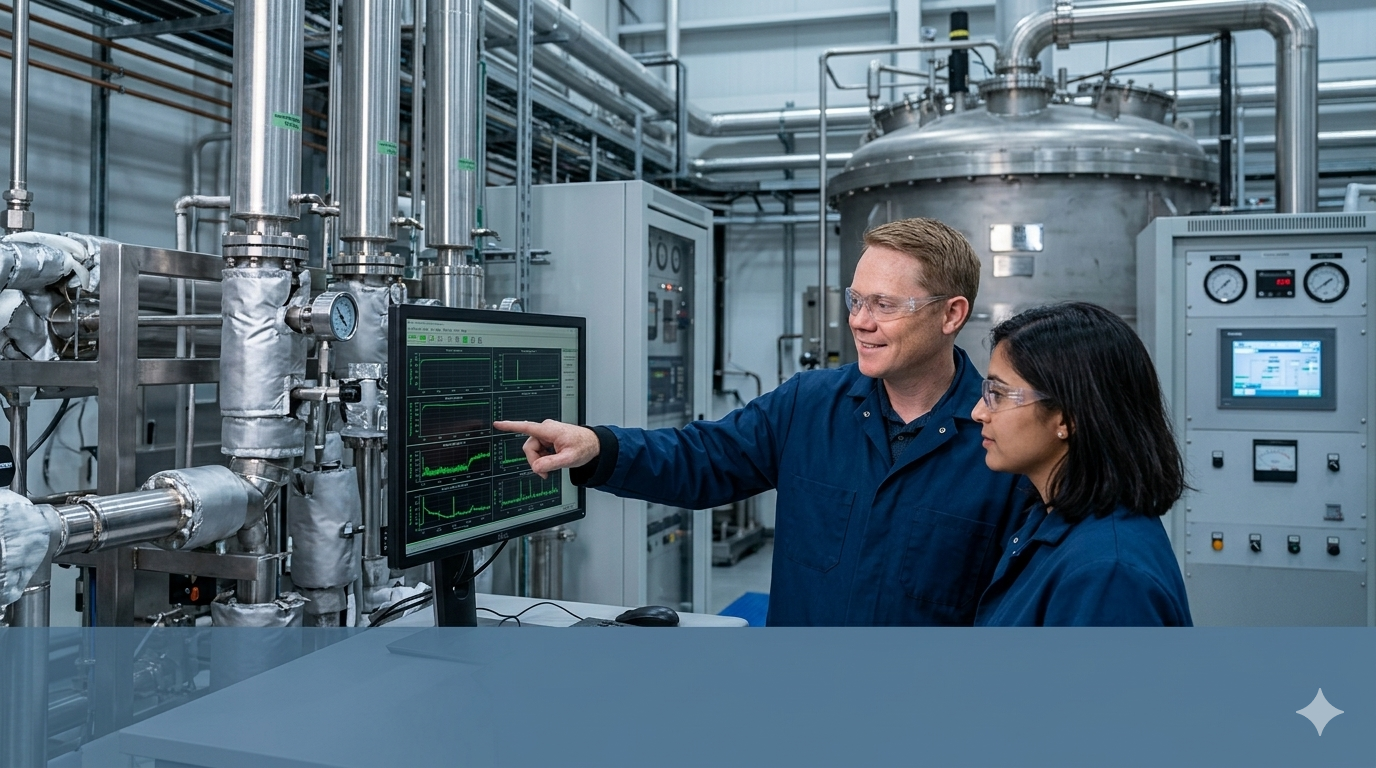
Cryogenics · NMPC PUBLICATION / PROOF-OF-CONCEPT Cryogenics · NMPC

Real-time NMPC for sparse-measurement cryogenics

Output-feedback economic NMPC and nonlinear state estimation for a highly nonlinear LHC superfluid helium process with dead time, inverse response, saturation, constraints, and sparse instrumentation.

Demonstrates how first-principles modelling, estimation, simplification, and online optimization can make advanced control practical for a constrained cryogenic process.

Relevant for: Cryogenic facilities, accelerator labs, fusion, superconducting magnets, and process-control teams.

Documented task

"best possible controller for the temperature regulation … of the … superconducting magnets … (LHC)"

CERN · Recommendation Letter (Geneva, 10.03.2009)
Performance rating

"I recommend Mr. Noga without any reservation."

CERN · Recommendation Letter (Geneva, 10.03.2009)
Airborne Systems · Trajectory Optimization PUBLICATION + PROJECT WORK Airborne Systems · Trajectory Optimization

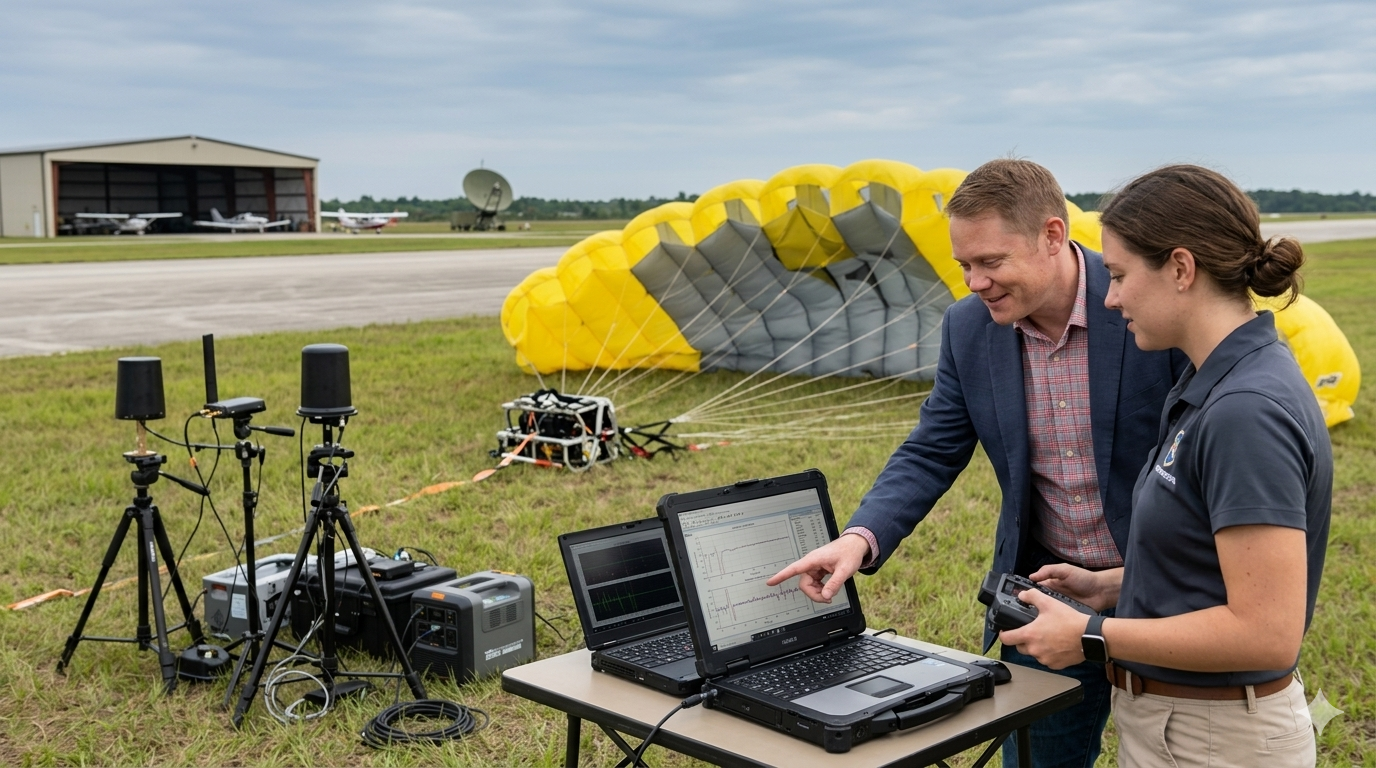
From inherited prototype controls to optimized flight trajectories

SkySails experience spanning full-scale prototype tuning, flight-data analysis, identification/model-based feedback improvement, setpoint adaptation, and nonlinear constrained trajectory optimization for variable-trim airborne wind-energy kites.

Shows the path from making a real prototype usable to building optimization workflows for setpoints, performance studies, sensitivity analysis, and component-sizing decisions.

Relevant for: AWES, parafoil, tethered-drone, UAV, and flight-autonomy teams.

Documented task

"Nonlinear optimization of flight trajectories of tethered kites"

SkySails Power GmbH · Work Certificate (Hamburg, 31.03.2024) · translated from German
Performance rating

"Owing to his very good performance and abilities, we were always extremely satisfied with Mr. Noga."

SkySails Power GmbH · Work Certificate (Hamburg, 31.03.2024) · translated from German
Wind Energy · Large Machines PROJECT / PUBLIC MATERIAL Wind Energy · Large Machines

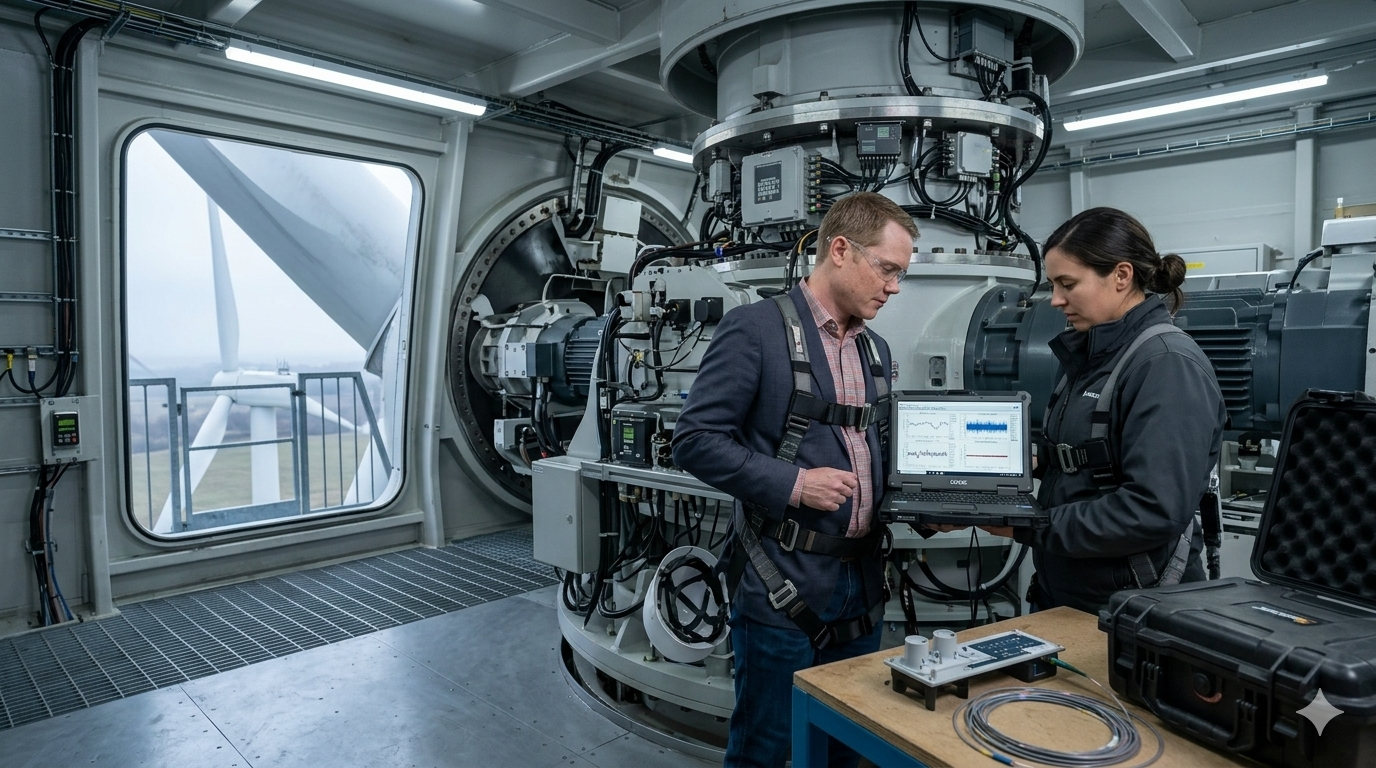
Advanced control for larger, more elastic machines

Wind-turbine control work covering model-based architecture, state estimation, economic NMPC thinking, parameter optimization, diagnostics, and the balance between energy output, structural motion, fatigue loads, actuator wear, and constraints.

Relevant when a new machine generation becomes more flexible or coupled and the inherited control concept no longer balances performance and loads robustly.

Relevant for: Wind-turbine OEMs, machine builders, renewable-energy R&D, and heavy-machinery controls teams.

Documented task

"Conception of nonlinear model predictive controllers (NMPC) for a wind turbine"

IAV GmbH · Work Certificate (Gifhorn, 31.07.2020) · translated from German
Performance rating

"Particularly noteworthy are his exceptionally analytical mind and his very quick grasp."

IAV GmbH · Work Certificate (Gifhorn, 31.07.2020) · translated from German
Soft Sensors · Sensor Fusion PROJECT + RECURRING PATTERN Soft Sensors · Sensor Fusion

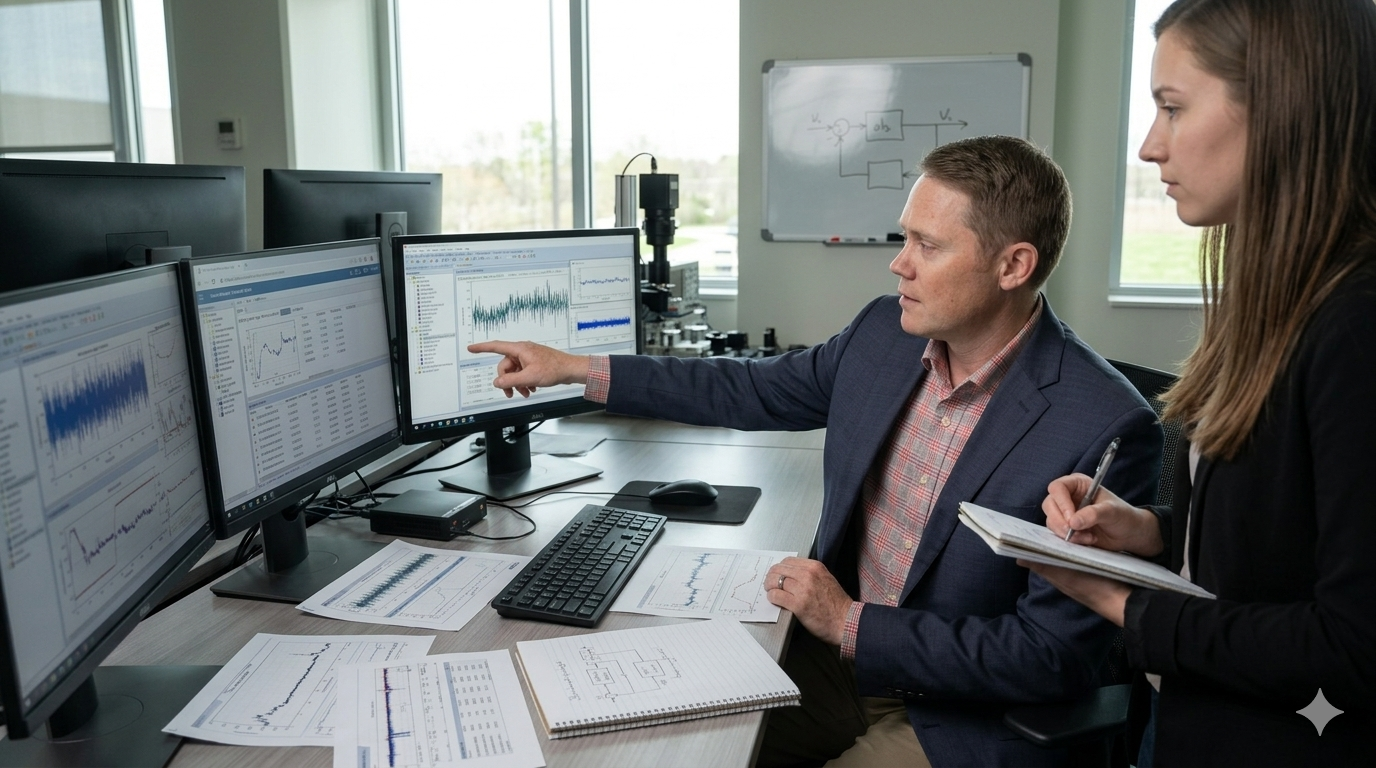
Estimating what cannot be measured directly

Nonlinear data-fusion estimation for a paragliding variometer — first-principles aerodynamic modelling, sensor-fusion architecture, and experimental flights — and the recurring soft-sensor pattern that runs through the cryogenic, wind, and airborne-systems work above.

Shows the soft-sensor approach as concrete product-engineering work: model + available sensors + nonlinear estimation produces the variable the operator or controller actually needs.

Relevant for: Process plants, machine builders, sensor companies, soft-sensor projects, R&D teams with sparse or noisy measurements.

Documented task

"Development of state estimators for linear and nonlinear systems"

SkySails Power GmbH · Work Certificate (Hamburg, 31.03.2024) · translated from German

My publications

Peer-reviewed papers, conference proceedings, and theses on Model Predictive Control, state estimation, and cryogenics at CERN.

Show more publications
Writing a paper?
Cite my work with properly formatted BibTeX entries.

From symptom to the right technical layer

Once the symptom is clear, the next question is not a tool name. It is which technical layer is weak: measurement, estimation, monitoring, control, optimisation, or simulation.

Layer 1 The right signals are missing, inconsistent, or not historized cleanly.

Typical solution: Measurement & data infrastructure

Before optimization or advanced control, the plant needs trustworthy measurements, timestamps, scaling, and data access.

Layer 2 The important quality variable or internal state is not measured directly.

Typical solution: Soft sensors & state estimation

Relevant when lab values arrive too late, key states are hidden, or the process needs an inferential measurement layer.

Layer 3 The process drifts, behaves oddly, or produces anomalies without a clear root cause.

Typical solution: Process monitoring (SPC / MSPC / FDD)

Used to detect deviations early and make process behaviour visible before it becomes scrap or downtime.

Layer 4 Wear, degradation, or failure risk drives unplanned downtime and maintenance cost.

Typical solution: Predictive maintenance

Relevant when the real issue is condition-based maintenance rather than setpoint tracking or optimization.

Layer 5 Loops oscillate, disturbances matter, and multiple variables and constraints interact.

Typical solution: APC / MPC / NMPC

This is the right layer when the plant needs better closed-loop control, not just visibility or dashboards.

Layer 6 The plant runs, but not at the economically best operating point.

Typical solution: Real-time optimization

Relevant when throughput, energy, yield, and constraints must be traded off continuously as conditions change.

Layer 7 Teams need safe testing, faster commissioning, or operator training without risking production.

Typical solution: Digital twin

Useful when the bottleneck is experimentation, what-if analysis, or building confidence before changing the real plant.

My focus areas

Work is concentrated where model-based control, estimation, and optimisation have direct operational leverage.

Process Industries & Cryogenic Controls

Process industry — APC/MPC, soft sensors, cryogenic controls

APC/MPC, soft sensors, and model-based control for process plants, including hard-constrained thermo-hydraulic and cryogenic systems.

Learn more →

Manufacturing & CNC

Manufacturing & CNC — automation, robotic cells, machine building

Reduce cycle time and raise throughput on CNC machining, robotic milling and assembly lines. Contour error compensation, feed-rate optimization and deflection prediction cut scrap and raise surface quality.

Learn more →

Wind Turbine Controls

Wind turbine controls — pitch, torque, load alleviation, tower damping

Pitch, torque, supervisory control, diagnostics, and economic control concepts for utility-scale turbines.

Learn more →

Paraglider & Kite-Based Systems

Paraglider & kite systems — parafoil, AWES, UAV autopilot

Flight state estimation and closed-loop control for paragliders and kite-based systems — observer design, stability augmentation, and autonomous guidance, backed by 1,000+ hours of hands-on paraglider flight.

Learn more →

European R&D Consortia

Available as named technical partner / scientific advisor for Eureka, Eurostars-3, Horizon Europe, and ZIM-international R&D proposals. Credentialed depth across industrial process, mechatronics, and aerial-autonomy pillars. Based in Germany; ZIM-eligible.

How I fit your consortium →

Frequently Asked Questions

Common questions about Advanced Process Control and working together.

What is Model Predictive Control (MPC)? +

MPC is an advanced control strategy that uses a mathematical model of your process to predict future behavior and optimize control actions. It excels at handling multi-variable systems with constraints, delivering better performance than traditional PID control.

How long does an APC implementation take? +

Timelines vary by scope. A diagnostic phase typically takes 2-4 weeks. A full proof-of-concept can be completed in 2-3 months. I work in agile 2-week sprints with deliverables at each stage.

What ROI can you expect from APC? +

Published reference implementations report: 17% less primary energy in simulation versus the previous rule-based control of a Swiss office building (ETH Zurich OptiControl-II, IEEE TCST 2016), precalciner temperature variability reduced by more than 50% in a cement plant (Holcim Lägerdorf / ABB, 2008), and the mean slab-temperature error of a steel reheating furnace cut from 13.0 K to 0.9 K (Dillinger / TU Wien, 2013). Payback depends on your energy and quality costs and on the starting point, so I estimate it per case rather than quoting a generic range. Every process is different — a 30-minute technical fit call is the fastest way to estimate the realistic opportunity for your system.

Do you work remotely or on-site? +

Both. Many phases can be done remotely, including data analysis, model development, and simulation. On-site presence is valuable for commissioning, operator training, and initial diagnosis.

What industries do you work with? +

Process industry (chemicals, pharma, food & beverage), manufacturing, machine builders, and energy generation. Any industry with complex, multi-variable processes can benefit.

Can you sign an NDA before I share data? +

Yes — a mutual NDA is standard practice and I sign before any data or process details are shared. I also work comfortably in export-controlled and security-sensitive environments.

What if the project doesn't deliver the expected results? +

I structure every engagement in phases with clear deliverables and exit points. If a phase shows the expected benefit is not achievable, I say so — and stop — rather than continuing to invoice. A failed proof-of-concept early is far cheaper than a failed deployment late.

Can you work with our existing SCADA / DCS / ERP? +

Yes. I work at the data layer — if your historian or data infrastructure exports standard formats (OPC-UA, CSV, REST), I can interface with it regardless of DCS or SCADA vendor. PLC-level and vendor-specific control system integration requires collaboration with your automation team or vendor.

Who owns the IP and code developed during the project? +

The code and models developed remain the intellectual property of Dr. Noga. The client receives a perpetual use license included in the development price. Exclusive licenses and non-compete agreements (NCA) are available and negotiable. Details are defined in the contract.

Do you work alone or with a team? +

Primarily alone — which means senior-level attention on every task, no junior handoffs, and no account-manager overhead. For projects requiring additional capacity, I have a trusted network of specialist engineers I can bring in under the same quality and confidentiality standards.

Have more questions?

Ask directly

Contact

Send a message

I reply within 24 hours.  ·  NDA signed on request · No spam · GDPR-compliant

Your data is processed by FormSubmit.co and used solely to respond to your inquiry. No marketing without consent.

Direct contact

Dr. Rafał Noga

Meeting

Book a 30-min technical fit call directly via Calendly.

Book a 30-min technical fit call

Stay Updated

Get insights on Industrial AI, APC, and process optimization delivered to your inbox.

My blog

Short and clear: practical notes on control, optimization and digitalization.

Read more →