"A clogged filter. An air leak. A seized engine. Know before it's too late."
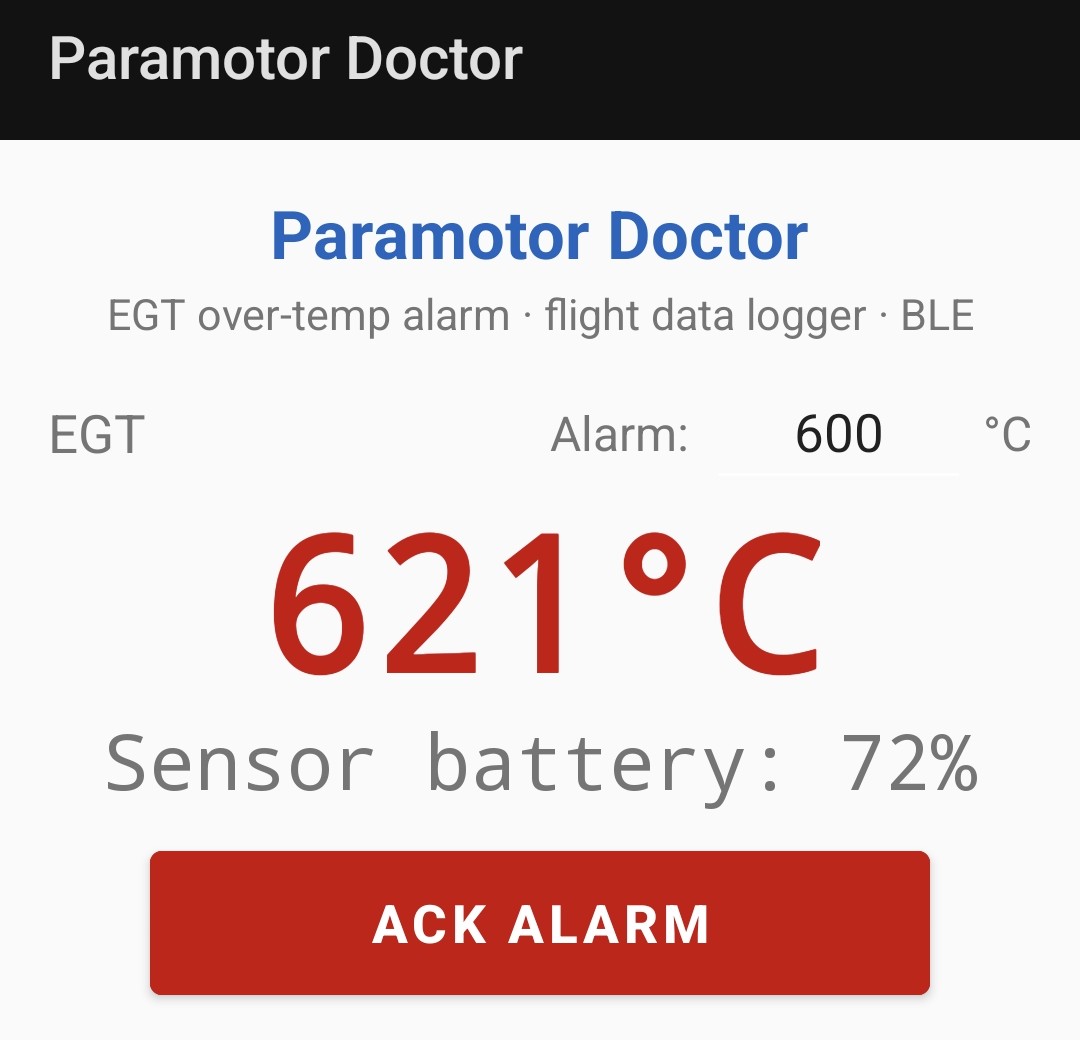
ParaDoc streams live exhaust gas temperature to your Android phone over Bluetooth and triggers a loud alarm on your phone — even with the phone in your pocket — the moment EGT climbs into the danger zone.
Four things that work on day one, guaranteed.
Temperature every 2 s via Bluetooth. Big, readable numbers.
Max-volume emergency tone + continuous vibration when EGT exceeds your threshold. Works if the phone is in your jacket. Flashes red on screen. Auto-clears when temp drops.
EGT appears as a live sensor widget in XCTrack. No extra setup needed.
Sensor battery % shown on your phone. No surprises mid-flight.
Installation note: Mounting the thermocouple requires drilling a small hole in the exhaust pipe and welding or soldering in a bung adapter (M6 or 1/8 NPT, supplied with the unit). One-time job; most pilots do it themselves in under 30 minutes. Works with any 2-stroke or 4-stroke paramotor.
Every ParaDoc unit logs two microphone channels (1 kHz and 48 kHz), accelerometer, barometric pressure and GPS on every flight. That raw data is the foundation for a set of diagnostic algorithms currently in development:
This is genuine R&D. None of the above is promised or guaranteed. What you are buying is the EGT alarm system. Advanced diagnostics are in development. If and when specific features are ready, they may be released as paid upgrades or as open-source modules — depending on demand.
No fine print. Here is exactly what happens.
Fill in the form below. Within 24 hours you receive an invoice for €49 by email — pay by bank transfer (SEPA) or PayPal.
Rafal designs the production version (real PCB, weatherproof enclosure, CE cert) and ships it to you. Total price: €99 + shipping from Germany. You pay the remaining €50 plus actual shipping cost when shipping is confirmed — around October/November 2026. Delivery by 1 December 2026.
You receive a full €49 refund to your original payment method by 15 September 2026. No action needed from you.
What you are guaranteed: a working EGT sensor and alarm system. Advanced engine diagnostics (misfiring, bearing wear, gearbox health) are in development and are not part of this purchase. If released, they may come as paid upgrades or open-source modules. Shipping cost from Germany is charged separately at cost when shipping is confirmed.
Photos and screenshots of the working prototype.
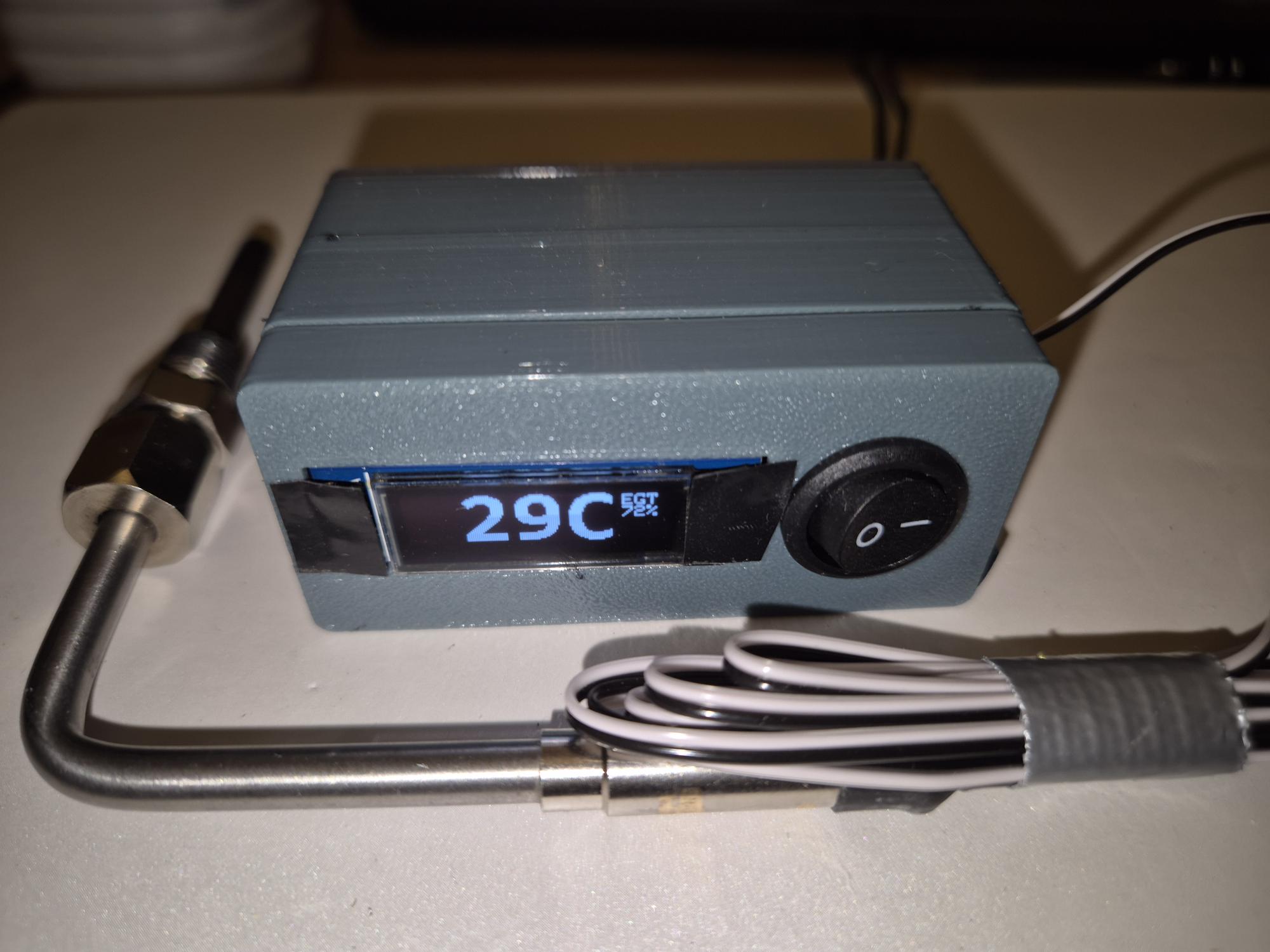
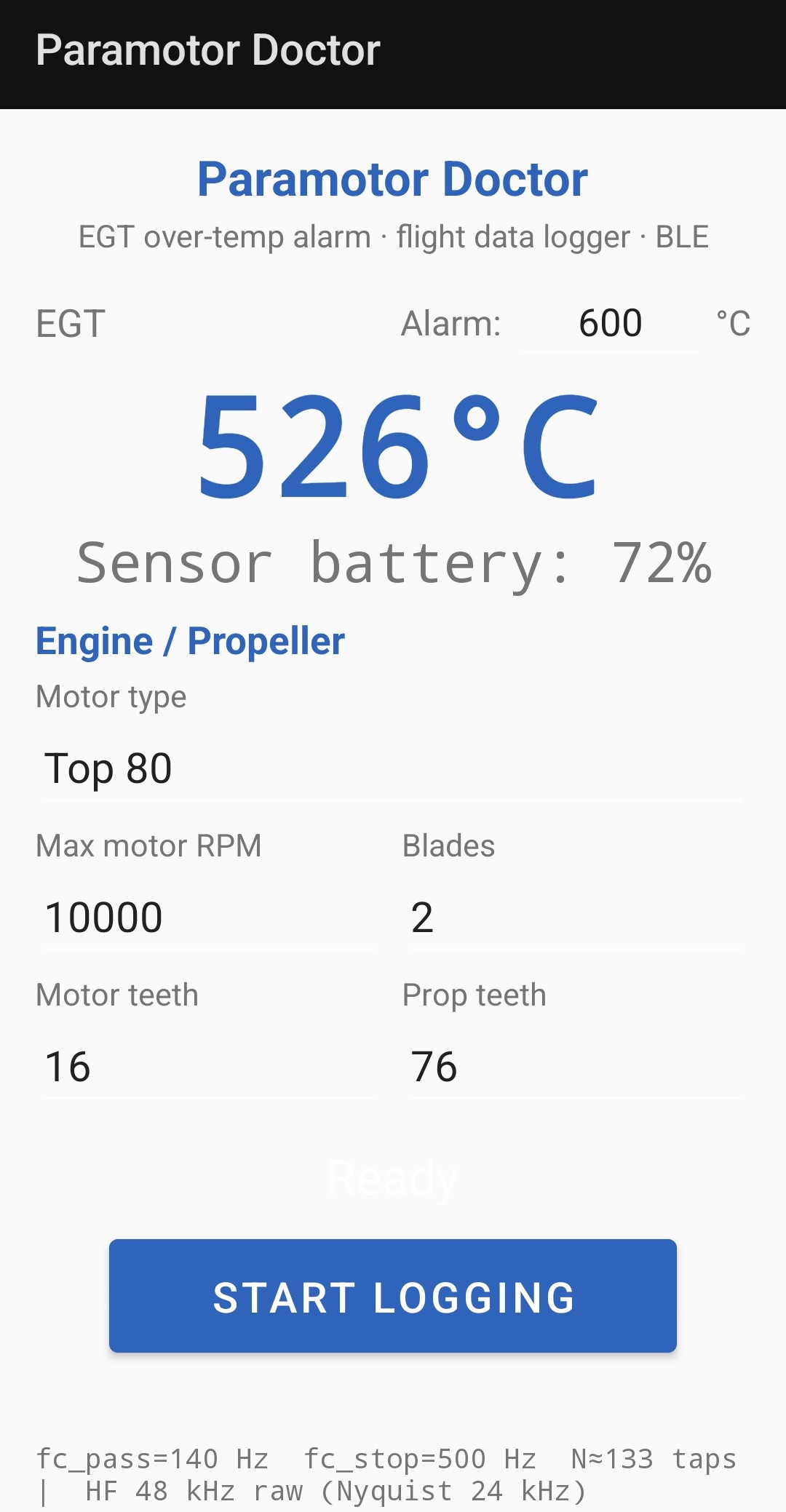
This is not a startup pitch. I'm a paramotor pilot who got tired of guessing at what's happening inside the engine. I built a prototype, it works, and I fly with it.
What I need is enough buyers to justify a proper production run — a real PCB, weatherproof enclosure, and CE certification. If 500 of us want this, I'll build it properly. If not, I'll refund everyone and keep flying with my prototype.
— Rafal, paramotor pilot & software engineer
Something went wrong. Please try again or email rafal@noga.es directly.
Fill in your details — you'll receive a €49 invoice by email within 24 hours. Pay by bank transfer or PayPal. No payment is taken through this form.
Beyond ParaDoc, I'm a freelance engineer specialising in paramotor- and paraglider-wing-based systems — including Airborne Wind Energy (formerly SkySails). I offer:
This page reaches powered paragliding pilots worldwide interested in engine safety and avionics. Collaboration options:
Interested? rafal@noga.es
Last updated: April 2026
Dr. Rafał Noga
Waldstr. 3
94149 Kößlarn
Germany
E-mail: rafal@noga.es
Phone: +49 175 6176792
Freelance engineer (Freiberufler) registered under German income tax law. VAT ID: DE457893621. Sales of physical goods will be fulfilled by a registered trade entity (Gewerbe or GmbH) to be established prior to shipping if the campaign goal is reached.
Submitting the registration form is an expression of interest and constitutes a conditional pre-order offer. No payment is taken through the website. After you register, Dr. Rafał Noga will send you an invoice for €49 by email within 24 hours. Payment is due within 14 days of the invoice date, by SEPA bank transfer or PayPal as stated on the invoice. Your registration is confirmed once payment is received.
The guaranteed deliverable is a functional EGT sensor and alarm system (live EGT on Android phone, unmissable alarm, XCTrack integration, battery indicator). Advanced engine diagnostics (misfiring detection, bearing wear, gearbox health) are in R&D and are not part of the purchase commitment. If specific features reach the required reliability, they may be released as paid upgrades or as open-source modules — this has not been decided and forms no part of the current purchase.
You have the right to withdraw from this pledge agreement within 14 days without giving any reason (§312g BGB / EU Directive 2011/83/EU). The withdrawal period starts on the day of your pledge. To exercise this right, send a clear statement to rafal@noga.es. You will receive a full refund within 14 days of your withdrawal notice.
After the campaign goal is reached and production is confirmed, the right of withdrawal for the final €50 payment does not apply if the device is manufactured to your specification (§312g(2) Nr.1 BGB).
These terms are governed by German law. The EU Online Dispute Resolution platform is available at ec.europa.eu/consumers/odr. We are not obliged and not willing to participate in dispute resolution proceedings before a consumer arbitration board.
Last updated: April 2026
Dr. Rafał Noga · Waldstr. 3 · 94149 Kößlarn · Germany · rafal@noga.es
Backer data (name, email, country, pledge date, Stripe payment ID) is retained for 10 years for accounting and tax purposes (§147 AO), then deleted. If the campaign fails and your pledge is refunded, you may request deletion of your personal data after the refund is confirmed.
No personal data is sold, shared for advertising, or transferred to any other third party.
You have the right to access, rectify, erase, restrict or port your personal data, and to object to processing. To exercise any right, email rafal@noga.es. You also have the right to lodge a complaint with your national data protection authority.
Last updated: April 2026
If fewer than 500 registrations are received by 31 August 2026, 23:59 UTC, all €49 pledges are refunded in full by 15 September 2026. No action is required from you. The refund is returned via the same method used to pay (bank transfer or PayPal).
You may cancel your registration at any time before 31 August 2026, 23:59 UTC, by emailing rafal@noga.es. A full €49 refund will be issued within 10 business days. If you have not yet paid the invoice, simply notify us and no further action is needed. Your 14-day statutory EU right of withdrawal applies from the invoice date (see Terms & Conditions §5).
Once the goal is reached and you have been notified, the €49 deposit is non-refundable (it represents your confirmed production slot). The remaining €50 payment (due at shipping confirmation) is refundable if you cancel before your unit ships. If the unit ships and arrives damaged or not as described, your statutory consumer rights apply under German law (BGB §§ 434 ff.).
All refunds are issued via the original payment method (bank transfer or PayPal). Allow 5–10 business days for your bank or PayPal to process the refund after it is initiated.
